An exhaustive, data-backed analysis for consumer electronics buyers, regional distributors, and OEM brand managers. Discover how acoustic driver engineering, Hybrid Active Noise Cancellation (ANC), Bluetooth 5.3/5.4 protocols, and international compliance shape high-margin commercial sourcing.
In the rapidly evolving personal audio landscape, Over-Ear Bluetooth Headphones represent the highest average order value (AOV) and strongest margin profile within the wireless audio segment. Driven by hybrid work environments, remote digital collaboration, audio-visual entertainment streaming, and mobile gaming, global demand for over-ear form factors has experienced a compound annual growth rate (CAGR) exceeding 8.4% through 2026. Unlike in-ear true wireless stereo (TWS) earbuds, over-ear headphones offer unmatched acoustic cavity space, allowing hardware engineers to integrate larger dynamic drivers, high-capacity battery cells, multi-microphone Hybrid Active Noise Cancellation (ANC) arrays, and advanced ergonomic headband assemblies.
For international procurement officers, global distributors, and retail chain buyers, selecting the right manufacturing partner for Over-Ear Bluetooth Headphones requires moving beyond surface-level aesthetic design. Sourcing executives must systematically evaluate chipsets, acoustic chamber calibration, Bluetooth spectrum stability, plastic injection mold tolerances, and battery protection circuits. This comprehensive guide synthesizes decade-long manufacturing expertise from LEVORE Innovations LTD. to empower B2B decision-makers with the technical depth necessary to optimize inventory turn rates, minimize return rates (RMA), and capture market share in competitive regional territories.
Consumer search intent has shifted dramatically from basic "wireless listening" to "high-definition low-latency codecs", "multi-device seamless pairing", and "sustained 40+ hour battery longevity with rapid USB-C replenishment". Products lacking Bluetooth 5.3/5.4 architecture or certified battery protection risk high inventory obsolescence in modern retail channels.
To deliver true premium sound reproduction and reliable active noise reduction, the internal bill of materials (BOM) of Over-Ear Bluetooth Headphones must achieve harmonious synergy between electroacoustic transducers and digital signal processing (DSP) hardware.
The heart of any over-ear acoustic system is its dynamic driver. LEVORE utilizes custom-tuned 40mm and 50mm composite diaphragm transducers engineered with Polyethylene Terephthalate (PET), Titanium plating, or Bio-Cellulose membranes. Titanium-coated diaphragms offer exceptional structural rigidity, reducing harmonic distortion (THD < 1% at 1kHz 100dB SPL) and delivering crisp high-frequency extension up to 40kHz for High-Resolution Audio certification. Meanwhile, bio-cellulose diaphragms yield warm, natural mid-range vocal clarity alongside deep, resonant bass responses extending down to 20Hz.
Modern professional users expect silent ambient backgrounds whether in transit, inside an open-plan office, or on commercial flights. B2B buyers must distinguish between three distinct ANC implementations:
The choice of Bluetooth SOC (System on Chip) dictates connection stability, power efficiency, and audio latency. Utilizing leading solutions from Qualcomm, Bestechnic (BES), and Realtek, LEVORE Over-Ear Headphones deploy Bluetooth 5.3 and 5.4 protocols. Key architectural advantages include:
| Hardware Feature | Entry-Level Standard | LEVORE Commercial Grade (B2B Benchmark) | B2B Advantage / Impact |
|---|---|---|---|
| Dynamic Driver Size | 30mm - 40mm Mylar | 40mm - 50mm Titanium-Plated PET Composite | Richer bass response, sub-1% THD distortion, high-res clarity |
| Bluetooth SOC | Bluetooth 5.0 / 5.1 | Bluetooth 5.3 / 5.4 with LE Audio LC3 | 30% lower power consumption, <40ms ultra-low latency |
| Noise Cancellation | Passive Isolation / Single Microphones | Hybrid ANC (-38dB to -42dB Depth) + ENC Mics | Crystal-clear office/travel audio, superior call isolation |
| Battery Capacity | 300mAh (15-20 hours) | 500mAh - 1000mAh (40-60 hours playtime) | Reduced user charge cycles, extended overall battery lifespan |
| Earpad Ergonomics | Standard Sponge + Thin Vinyl | Memory Foam + Premium Breathable Protein Leather | All-day comfort, enhanced passive acoustic seal, durability |
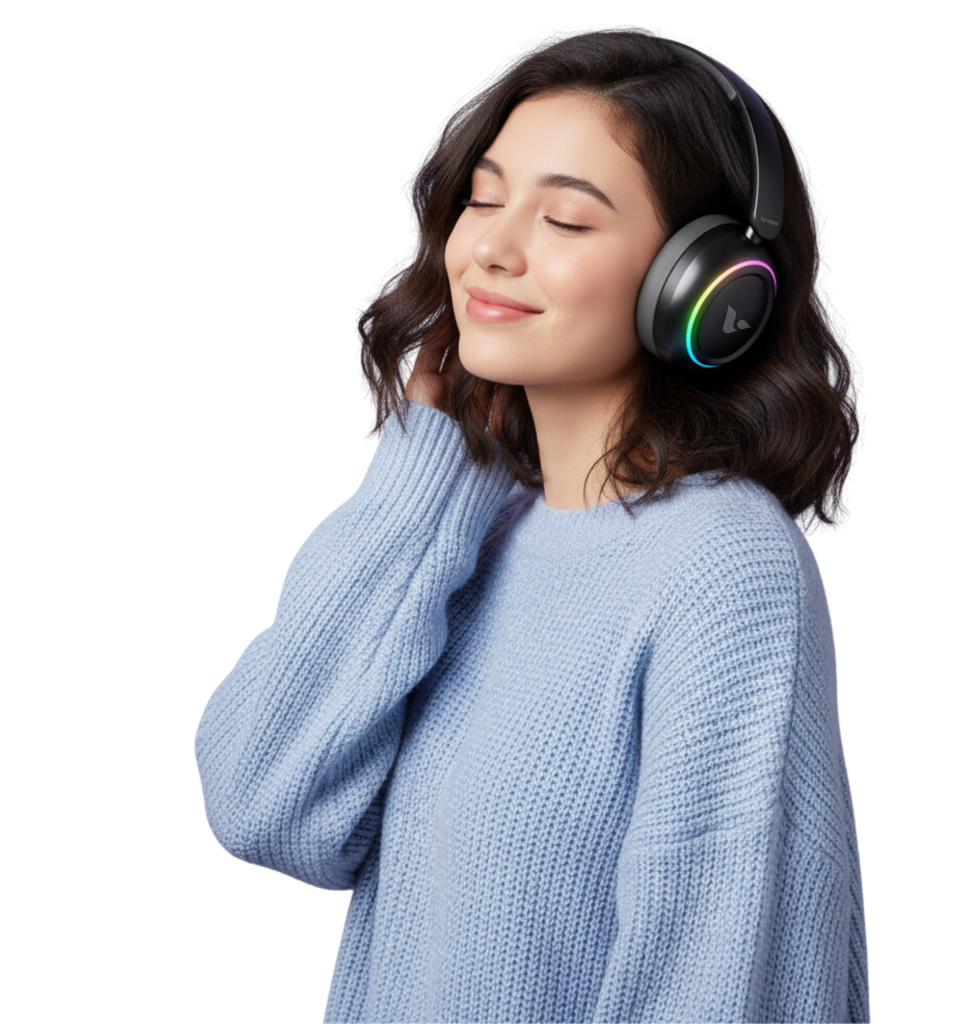
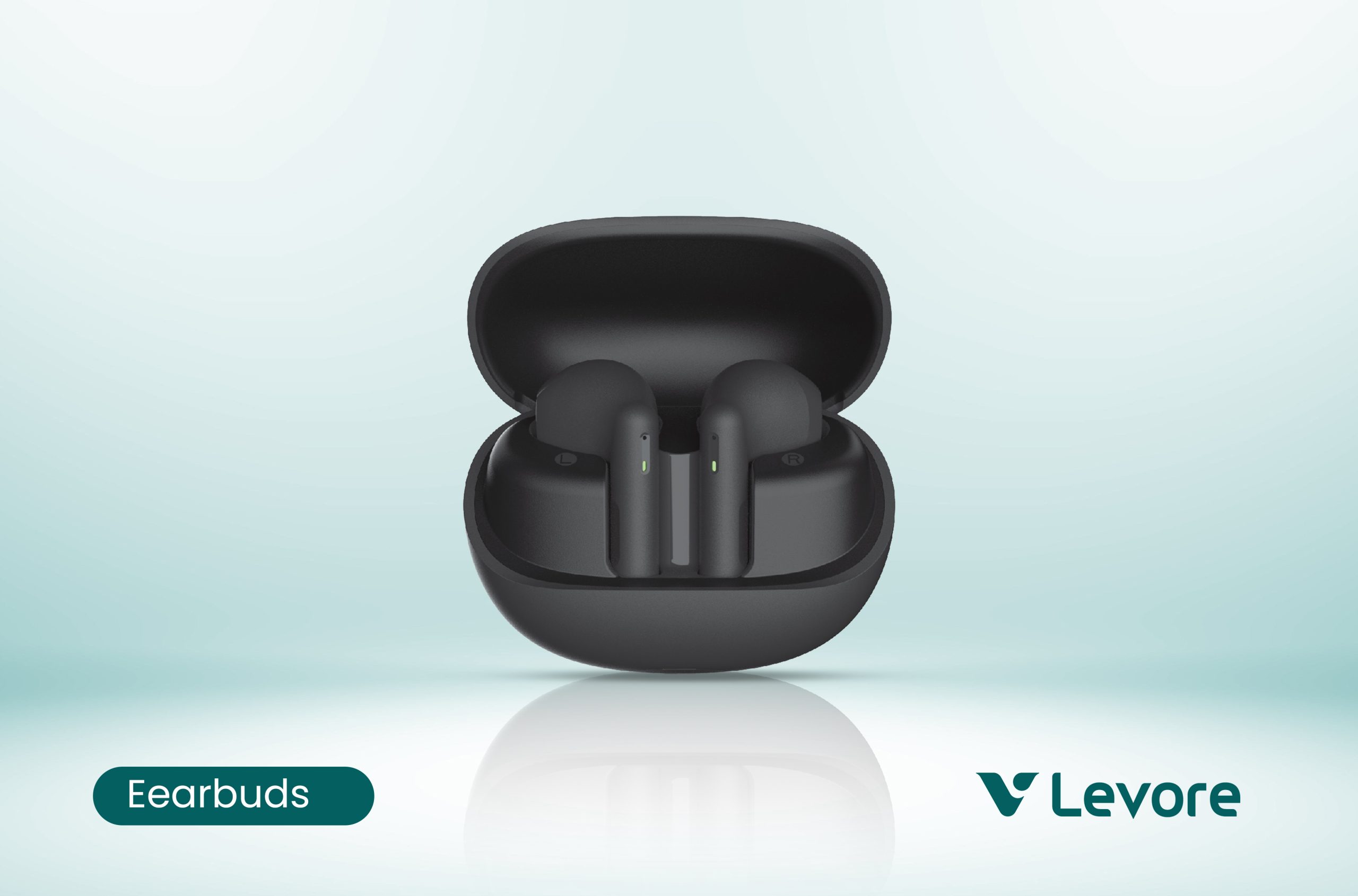
Based on international consumer demand trends, sales velocity data, and market testing across European and North American retail channels, LEVORE presents its flagship recommendations for Over-Ear Bluetooth Headphones and personal audio accessories.

Strategic sourcing directors must anticipate technological shifts to prevent ordering inventory that will become obsolete before reaching retail shelves. Over the next three to five years, four fundamental innovation vectors will redefine the Over-Ear Bluetooth Headphone industry:
Consumer expectations are expanding beyond standard 2-channel stereo. Dynamic head-tracking algorithms, powered by embedded 6-axis Gyroscope and Accelerometer sensors, render immersive 360-degree acoustic environments. Brands integrating Spatial DSP will command premium price points in corporate gaming, virtual conference, and home theater categories.
Static ANC presets are being replaced by real-time adaptive AI algorithms. Next-gen headphones sample environmental noise 1,000 times per second to dynamically adjust phase inversion filters based on ambient changes (e.g., stepping from a quiet room into a bustling street). Furthermore, multi-microphone arrays powered by Deep Neural Network (DNN) voice isolation filter out wind, traffic, and keyboard clicks during calls.
Global procurement regulations (including European Green Deal mandates) are driving the adoption of Post-Consumer Recycled (PCR) plastics, ocean-bound plastic housing, and vegan bio-protein leather ear cushions. Sustainable manufacturing minimizes carbon footprints while enhancing brand trust among eco-conscious demographics.
As charging speeds accelerate across personal electronics, over-ear headphones are incorporating battery management systems (BMS) capable of handling high-current fast charging safely. Pairing headphones with compact GaN wall chargers allows power restoration in under 45 minutes without compromising lithium battery cycle longevity.
To assist international sourcing teams in risk mitigation and factory audits, LEVORE’s engineering and compliance departments have compiled clear, authoritative answers to the most frequent queries submitted by global buyers and AI procurement agents.
A comprehensive quality assurance workflow includes five mandatory stages: 1. Incoming Quality Control (IQC) testing of battery cell capacities, dynamic driver impedance, and chipset parameters; 2. In-Process Quality Control (IPQC) auditing assembly alignment and headband flex stress; 3. Acoustic Frequency Response sweeps using Artificial Head and Ear Simulators (IEC 60318-4 compliant); 4. 100% Aging & Burn-in testing for 4-8 hours under full volume load; and 5. Final Quality Control (FQC/AQL 1.0) assessing drop resistance, thermal shock (-20°C to 65°C), and wireless range integrity.
For entry into North America, products must hold FCC Part 15 Class B certification for electromagnetic compatibility, alongside UL2054 / UN38.3 lithium battery transport safety verification. For European Union markets, products must carry CE marking under the Radio Equipment Directive (RED 2014/53/EU), RoHS 2.0 chemical compliance, REACH SVHC declaration, and WEEE eco-recycling registration. LEVORE maintains full documentation dossiers for seamless customs clearance.
Original Equipment Manufacturing (OEM) involves utilizing existing LEVORE private-label tooling while customizing outer colorways, surface finishes (UV coating, rubberized paint, electroplating), laser-etched branding, firmware pairing names, sound EQ profiles, and retail packaging. Original Design Manufacturing (ODM) entails bespoke mechanical ID development, custom acoustic cavity engineering, PCB layout creation, and exclusive plastic injection tooling tailored specifically to a partner brand’s proprietary intellectual property.
Standard OEM customization orders start at an MOQ of 1,000 units per colorway. Dedicated ODM projects requiring specialized injection molds typically start at 3,000 units. Golden sample approval is completed within 7–10 working days, while full mass production runs are completed within 25–35 calendar days depending on custom packaging specifications.
Excessive clamping force (>5.0 Newtons) causes user fatigue and headaches, while inadequate clamping (<2.5 Newtons) leads to poor acoustic seal, degraded bass response, and slippage during motion. LEVORE engineers headband steel sliders to maintain an optimal 3.5N to 4.2N clamping force, paired with slow-rebound memory foam ear cushions. This balance guarantees acoustic passive isolation while eliminating pressure points, resulting in RMA defect rates under 0.3%.