High-performance B2B wireless audio inventory engineered for wholesale importers, brands, and enterprise procurement partners serving the Greater Tokyo Area and international retail channels.
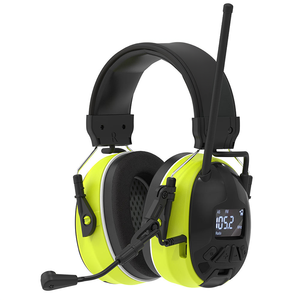
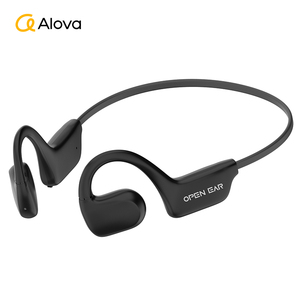
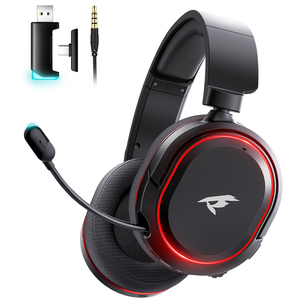
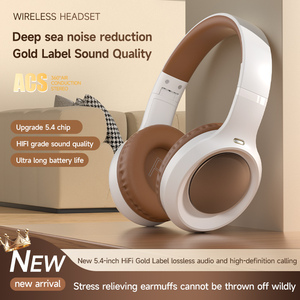
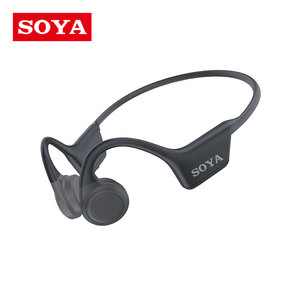
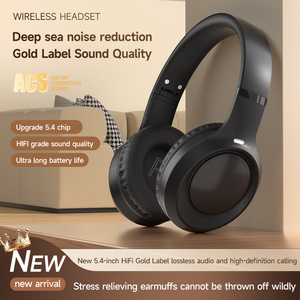
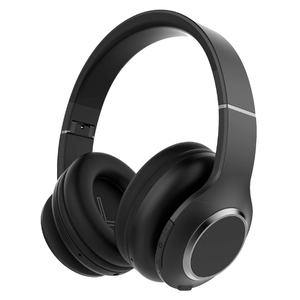
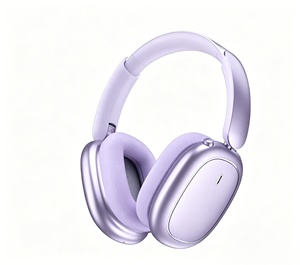
Understanding the engineering standard required by OEM/ODM factories serving Japan’s most demanding urban acoustic landscape.
Active Noise Cancellation (ANC) has evolved from a luxury perk to an essential baseline requirement across consumer and corporate electronics in Japan. For B2B buyers, distributors, and private-label brand operators sourcing from Active Noise Cancelling headphones factories, catering to the specific acoustic parameters of the Tokyo metropolitan area requires a nuanced technical strategy. Tokyo presents a unique sonic profile characterized by continuous low-frequency train hums (Yamanote Line, Tokyo Metro, Toei Subway), dense electromagnetic spectrum environments in districts such as Shibuya and Shinjuku, and ultra-compact living spaces requiring superior acoustic isolation without sound leakage.
Our factory production lines utilize dual-chip Digital Signal Processing (DSP) paired with specialized acoustic chamber calibration to deliver targeted attenuation across critical frequency bands.
To deliver true Information Gain for industrial buyers, factory production must balance acoustic attenuation with sound field preservation. Simple single-microphone (feedforward-only) ANC designs fail in Tokyo's high-density commuter environment because sudden air-pressure fluctuations—such as trains entering underground tunnels—cause digital clipping and unpleasant acoustic artifacts. Leading Active Noise Cancelling headphones factories serving Japan deploy Hybrid ANC systems utilizing external feedforward microphones to detect environmental noise prior to reaching the ear cavity, combined with internal feedback microphones positioned near the speaker driver to monitor the residual audio spectrum in real-time.
Comparative engineering specifications optimized for Japanese consumer electronics retail standards.
| Parameter | Entry-Level Consumer OEM | Commercial Enterprise Class | Levore Industrial Standard (Tokyo Market) |
|---|---|---|---|
| ANC Architecture | Single Feedforward Mic | Dual Feedback Mic | Hybrid Multi-Mic + Dedicated DSP Core |
| Noise Reduction Depth | -18 dB to -22 dB | -28 dB to -32 dB | -38 dB to -45 dB (Customizable) |
| Commuter Frequency Dampening | Poor below 200 Hz | Moderate attenuation | Optimized for 80Hz–400Hz train rumble |
| Wireless Chipset & Protocol | Bluetooth 5.0 / 5.1 | Bluetooth 5.2 / 5.3 | Bluetooth 5.3 / 5.4 + LE Audio (LC3) |
| Japanese Regulatory Compliance | Basic CE / FCC | Standard TELEC | Full TELEC (MIC) + PSE Battery Certification |
| Acoustic Membrane Driver | 40mm Mylar PET | 40mm Titanium Composite | 40mm Polyurethane Graphene Matrix |
Tailoring ANC headphone manufacturing specs to real-world Japanese lifestyle and business environments.
Tokyo commuters spend an average of 60 to 90 minutes daily in trains experiencing ambient noise levels exceeding 80–85 dB SPL. Factory tuning emphasizes low-frequency cancellation (80Hz to 300Hz) while maintaining voice transparency modes so users can hear station announcements on the JR East lines without taking off their headsets.
With corporate Japan adopting hybrid workspace models, headsets require Environmental Noise Cancellation (ENC) dual-microphone beamforming. This ensures human voices (1kHz - 4kHz) are crystal clear during Zoom and Teams calls in bustling co-working hubs without capturing background office chatter.
Due to high acoustic sensitivity in Japanese housing and shared spaces, driver enclosure design must minimize sound pressure leakage. Our factory utilizes airtight acoustic cavity sealing and custom memory foam ear cushions to contain sound, achieving zero acoustic spillover at 70% volume.
Essential regulatory and technical considerations for seamless market entry in Japan.
All Bluetooth equipment sold within Japan must comply with the Radio Law (Radio Equipment Ordinance Article 2 Paragraph 1 Item 19). Our manufacturing processes integrate pre-certified modules or complete device testing to guarantee smooth TELEC registration under your brand name.
Internal rechargeable lithium-ion battery cells used in ANC headphones must pass rigorous thermal stability, overcharge protection, and volumetric energy density testing to carry the PSE mark—preventing customs delays at Narita or Yokohama ports.
Japanese consumers prefer sleek, matte-finished industrial designs over flashy chrome. Modern production lines utilize soft-touch UV coatings, foldable hinges engineered for over 15,000 stress cycles, and ultra-lightweight structural frames under 220g for long wearability.
Why leading global distributors and Tokyo buyers partner with our production ecosystem.
Leveraging over a decade of consumer electronics manufacturing mastery and a corporate heritage rooted in European design principles, our factory infrastructure bridges the gap between premium industrial aesthetics and scalable, cost-effective B2B assembly. We operate automated SMT lines, acoustic anechoic chambers, and rigorous quality control testing facilities adhering to ISO9001 and ISO14001 international standards.
Every ANC headphone batch undergoes 100% automated SoundCheck sweep analysis to verify frequency response tolerance within ±1.5 dB and Total Harmonic Distortion (THD) below 0.5% at 1 kHz.
We provide full firmware customization, including voice prompt localization in Japanese/English, custom EQ presets optimized for J-Pop or podcasts, and bespoke Bluetooth pairing IDs.
From low MOQ trial runs for specialized Tokyo boutique retailers to high-volume multi-container logistics for global consumer brand chains, our supply chain ensures predictable lead times.
Answers to standard commercial, technical, and regulatory procurement queries.
Initial OEM custom orders requiring personalized packaging, TELEC logo printing, and Japanese firmware localization typically take 25 to 30 days post-sample approval. Repeat ODM production runs can be completed in 15 to 20 days, with express air freight delivery directly to Haneda or Narita airports taking 3-5 business days.
We work directly with accredited testing labs (such as SGS, TÜV, and TELEC-approved testing bodies). We supply full documentation packages, including safety test reports for lithium-ion polymer batteries under the PSE framework and RF test reports for 2.4GHz Bluetooth transmission compliance under TELEC, allowing hassle-free customs clearance.
Yes. Japanese sound preferences generally favor clean treble resolution, warm balanced midranges for vocal clarity, and controlled, non-boomy bass. Our acoustic engineers can adjust the DSP sound profile and ANC filter curves to meet these specific sound target curves before mass production.
Standard private-label packaging and logo printing start at an accessible MOQ of 500 to 1,000 units per model. For deep structural ODM modifications (custom tooling, earcup mold adjustments), MOQs typically start at 3,000 units.
Yes. We can flash custom ROMs containing native Japanese female or male voice prompts for key operations such as "Power On" (電源が入りました), "ANC On" (ノイズキャンセリング), and "Connected" (接続されました).
Our production process operates under strict AQL 0.4 Critical / 1.0 Major standards. Every unit undergoes multi-stage inspections: raw material incoming QC, SMT optical inspection, mid-assembly acoustic sweep tests, 4-hour battery burn-in, and final drop/vibration packaging stress tests prior to palletizing.
Expand your product offering in Tokyo and global retail markets with certified, high-margin, acoustically superior ANC headphones and wireless audio solutions. Speak directly with our B2B OEM/ODM engineering specialists.