Discover expert guides, technology trends, and market analysis on smart wearables, audio devices, and GaN fast chargers.
Smart Wearables
Smartwatch Tech & Trends
In-depth reviews, features breakdown, and buying considerations for fitness and touchscreen smartwatches.
Bluetooth 5.3 Audio
Audio Innovations & Insights
Explore the latest advances in wireless Bluetooth 5.3 headphones, earphone technology, and personal audio.
Industry Sourcing Whitepaper 2026
Top 10 USB C To Lightning Cable Supplier & Manufacturers
An Executive B2B Guide to MFi-Certified Charging Solutions, Fast-Charging Protocols, OEM/ODM Manufacturing Capabilities, and Global Electronics Sourcing Trends.
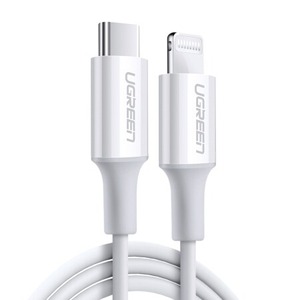
Explore our top-rated factory-direct charging cables engineered for high-durability, PD power delivery, high-speed data transmission, and certified Apple device compatibility.
1. Executive Market Overview: Sourcing USB C To Lightning Cables in 2026
The global mobile accessory market is undergoing a major technological transformation. Despite the European Union’s mandate transitioning consumer electronics toward universal USB Type-C interface standards under Directive 2022/2380, the global install base of Lightning-equipped Apple hardware—spanning iPhone 8 through iPhone 14 Pro Max series, legacy iPads, and AirPods accessories—exceeds 1.4 billion active devices worldwide. As a direct result, international enterprise procurement officers, consumer electronics distributors, and OEM brand importers face a unique procurement landscape where high-reliability USB C to Lightning Cables remain high-volume profit drivers.
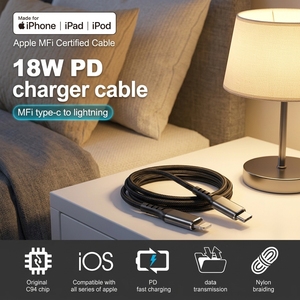
Modern B2B buyers must navigate complex supply chains to secure factory partners capable of delivering certified, ultra-durable charging solutions. Modern charging standards demand high-efficiency Power Delivery (PD 3.0/PD 3.1) integration capable of delivering 0% to 50% state-of-charge within 30 minutes (20W to 27W peak power delivery curves). Achieving this level of performance without triggering iOS popup errors or thermal throttling requires advanced manufacturing infrastructure, real-time dynamic handshaking protocols, and authentic Apple MFi (Made for iPhone/iPad) C94 logic chip assemblies.
Authentic C94 MFi Integration
Engineered with genuine Apple C94 connector modules providing cryptographic security, over-voltage protection, and zero iOS incompatibility popup risk during firmware upgrades.
27W Max Power Delivery
Supports 9V/3A high-speed PD fast charging optimized for iPhone 13/14 Pro Max and iPad Air/Mini series with intelligent temperature management.
Double-Braided Armor Sheathing
Constructed with high-tenacity ballistic nylon or recycled post-consumer TPE jackets, passing strict 25,000+ to 30,000+ mechanical bend radius stress testing.
2. Technical Evaluation: How to Audit Top USB C to Lightning Cable Suppliers
When conducting global vendor audits for commercial fast-charging cables, procurement directors must evaluate technical parameters beyond aesthetic surface finishing and unit wholesale pricing. Substandard suppliers often cut costs by utilizing copper-clad aluminum (CCA) conductors, omitting ESD/EMI shielding, or embedding cloned non-certified C94 chips that fail under iOS system updates.
A. Core Conductor Gauge & Copper Purity (AWG Rating)
High-performance PD cables require heavy-gauge power conductors to minimize internal resistance and thermal escalation. Industry-grade USB-C to Lightning cords should incorporate 21AWG to 24AWG oxygen-free pure tinned copper (OFC) for power lines combined with 28AWG to 30AWG data pairs. High purity reduces voltage drop over extended cable lengths (1.8m to 3m), maintaining stable 9V/3A 27W charging efficiency without excess power dissipation.
B. Internal Structural Shielding & Tensile Core Reinforcement
Tinned Copper Braid Shielding: 85%+ coverage rating mitigating crosstalk and static discharge during 480Mbps data synchronization.
C. Precision Strain Relief Design & Molded Connector Housing
The primary point of physical failure in mobile charging cables occurs at the junction between the rigid connector plug and the flexible cable jacket. Leading suppliers employ extended strain relief (SR) collars molded from flexible Thermoplastic Elastomer (TPE) featuring laser-welded stainless steel internal shields that protect micro-soldered joint points from torsional stress.
Evaluation Parameter
Tier-1 Certified Supplier (e.g. LEVORE)
Standard Commercial Supplier
Low-Cost Non-Certified Factory
MFi IC Authentication
Genuine Apple C94 Chip
Taiwan Cloned IC Solutions
Non-certified Copy (High Error Rate)
Conductor Wire Spec
21/28 AWG Pure Tinned Copper
24/30 AWG Standard Copper
Copper-Clad Aluminum (CCA)
Bending Cycles Test
> 25,000 to 30,000 Flexes
5,000 to 10,000 Flexes
< 2,000 Flexes
Data Sync Throughput
480 Mbps (USB 2.0 High Speed)
480 Mbps (Unstable Signal)
Charging Only (No Data Lines)
Safety & Regulatory
CE, RoHS, FCC, REACH, MFi, ISO9001
Basic CE / RoHS
None / Self-Declared
3. Global Procurement Trends & Technology Evolution (2026–2030)
As the consumer technology market accelerates toward higher power density and eco-conscious manufacturing practices, international purchasing teams must realign their sourcing strategies with three key macro trends shaping the cable and charger manufacturing sector:
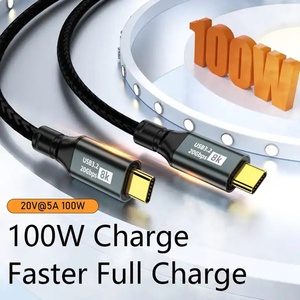
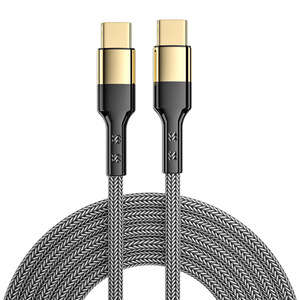
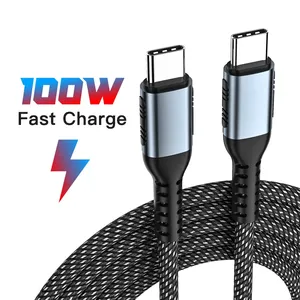
While new mobile devices utilize USB Type-C ports, the global replacement cable market for Lightning devices remains extremely profitable due to long hardware replacement cycles in North America, Latin America, Southeast Asia, and Eastern Europe. Strategic procurement offices are adopting a bifurcated sourcing model: maintaining steady volume contracts for high-margin MFi USB C to Lightning cords while expanding inventory portfolios into 100W PD 3.0 and 240W PD 3.1 USB-C to USB-C multi-protocol cables.
To eliminate manual soldering defects, elite factories are migrating toward 100% automated Surface Mount Technology (SMT) lines for connector board assembly. Computer vision optical inspection (AOI) coupled with automated electrical load testing ensures zero-defect rates (<50 PPM) across mass volume export orders.
Enterprise OEM/ODM Partner
Why Global Brands Partner with LEVORE Innovations
Headquartered in Rome, Italy (Via Casilina n.3) with specialized high-capacity production lines, LEVORE brings over a decade of consumer electronics innovation to global B2B buyers. Combining European design precision with certified quality control, LEVORE delivers full OEM/ODM customization—from custom housing molds and cable length configurations to branded retail packaging and complete compliance documentation for global market entry.
Italian Design Aesthetics
Full MFi & USB-IF Certification
Flexible Low MOQ Orders
Strict ISO9001 Batch Testing
Procurement Intelligence
Frequently Asked Questions for B2B Cable Buyers
Expert technical and commercial answers addressing certification, factory audits, OEM customization, and import regulations.
1. Why is Apple MFi Certification critical when importing USB C to Lightning Cables?
Apple MFi (Made for iPhone/iPad) certification ensures that cables contain authentic licensed C94 security chipsets. Non-certified clone cables frequently fail whenever Apple pushes iOS system firmware updates, leading to "Accessory Not Supported" popups, current overload hazards, battery health degradation, or complete hardware charging failure. Importing MFi-certified products safeguards brand reputation and prevents customer return surges.
2. What is the standard lead time for OEM/ODM bulk customized cable orders?
Standard production lead times for OEM customized orders (custom brand logos, specified jacket pantone colors, and tailored retail packaging) typically range between 20 to 30 business days following pre-production sample sign-off. For standard neutral inventory, dispatch can occur within 5 to 7 working days.
3. How do USB C to Lightning cables compare to USB C to USB C cables in power delivery capability?
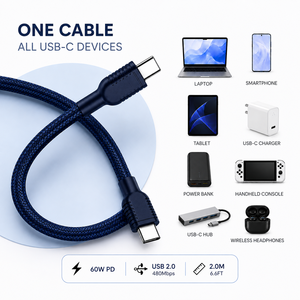
USB-C to Lightning cables max out at 27W (9V/3A) due to physical design limits of the Apple Lightning connector interface. In contrast, standard USB-C to USB-C cables can deliver 60W (20V/3A), 100W (20V/5A), or up to 240W under Extended Power Range (EPR PD 3.1) standards, allowing them to fast-charge high-draw laptops and workstations alongside mobile phones.
4. What quality control testing protocols are conducted prior to shipment?
A Tier-1 supplier enforces rigorous Quality Control (QC) procedures, including: 100% automated electrical continuity testing, 4-point voltage drop analysis, 25,000+ cycle SR bend radius flex tests, plug insertion/withdrawal force testing (10N-20N standard), salt spray corrosion testing (48-hour minimum for plated connectors), and environmental high/low temperature chamber aging tests.
5. What customization options are available for private label branding?
Private label customization options include laser-etched aluminum shell logos, molded rubber strain-relief branding, custom nylon pattern weaves, specialized cable tie additions, custom length specifications (0.2m, 1m, 2m, 3m), and retail-ready packaging formats such as blister packs, magnetic color boxes, or eco-friendly kraft paper pouches.
6. What international compliance documentation is required for importing cables into Europe and North America?
To clear customs seamlessly, shipments to North America require FCC certification and RoHS compliance. Shipments into the European Union require CE marking (EMC Directive 2014/30/EU), RoHS 2.0 certification, REACH SVHC compliance, and compliance with EU WEEE recycling directives. Reputable suppliers provide full test reports and certificates of conformity upon request.