Industry Insights & Guides

LEVORE Blog & Technology News

Discover expert guides, technology trends, and market analysis on smart wearables, audio devices, and GaN fast chargers.

Smart Wearables

Smartwatch Tech & Trends

In-depth reviews, features breakdown, and buying considerations for fitness and touchscreen smartwatches.

Bluetooth 5.3 Audio

Audio Innovations & Insights

Explore the latest advances in wireless Bluetooth 5.3 headphones, earphone technology, and personal audio.

B2B Technical Whitepaper & Sourcing Guide

China Wholesale Laptop Power Bank Station Manufacturer & Factory

Authoritative B2B guide on high-capacity PD 100W–2400W energy storage solutions, LiFePO4 battery safety protocols, commercial shared power hubs, and OEM/ODM factory sourcing strategies.

Industrial & Commercial Laptop Power Stations

Explore our engineered line of high-capacity portable power stations, PD 100W fast-charging laptop power banks, multi-port commercial charging docks, and rugged LiFePO4 solar generators.
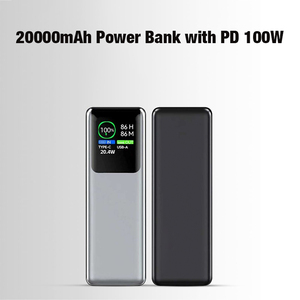
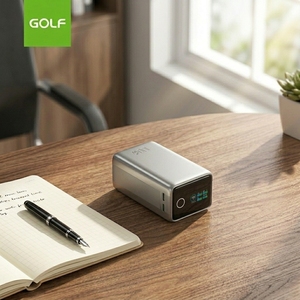
Portable High Capacity Fast Charging Laptop Power Bank 20000mAh PD100W

Portable High Capacity Fast Charging Laptop Power Bank 20000mAh Digital Display PD100W

PD 100W Output 20,000mAh Smart TFT Display Dual USB-C
Send an Inquiry
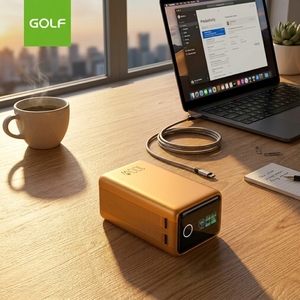
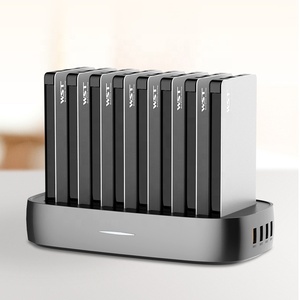
Portable 8 In 1 Shared Metal Cover Power Bank Cable Type-C 8000mAh Docking Station

Portable 8-In-1 Shared Metal Cover Power Bank Docking Station 8000mAh for Cafe & Enterprise

8-Slot Hub Metal Casing Built-in Cables Commercial Grade
Send an Inquiry
PD 100W Fast Charging Power Station Wholesale With Cable TFT Display Touch Power Bank

PD 100W Fast Charging Power Station Wholesale TFT Display Touch Switch 20000mAh

Touch Control 100W Bi-directional Integrated Cable Pass-Through Charge
Send an Inquiry
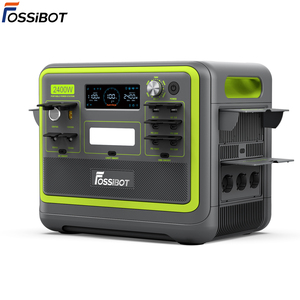
Fossibot F2400 2400W 2048Wh Big Capacity Solar AC Outdoor LiFePO4 Power Station

Fossibot F2400 2400W 2048Wh LiFePO4 Solar & AC Heavy Duty Outdoor Power Station

2400W Pure Sine 2048Wh Capacity LiFePO4 3500+ Cycles Solar MPPT
Send an Inquiry
100W Fast Charging Wholesale Customized Power Station Big Capacity TFT Display

100W Fast Charging Customized Power Station TFT Touch Screen 20000mAh Power Bank

OEM Custom UI PD 3.0 Protocol High Density Cell Aluminum Chassis
Send an Inquiry
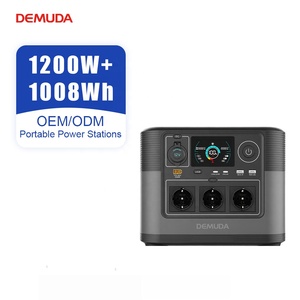
1200W UPS Power Bank Generator Emergency Portable Power Station LiFePO4

1200W Emergency UPS Power Bank Generator Portable Station EU/UK/US 110V/220V LiFePO4

1200W Output <10ms UPS Switch LiFePO4 Core Global Outlets
Send an Inquiry
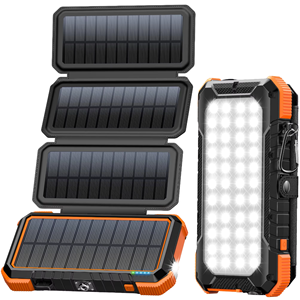
Portable Laptop Power Bank PD18W 3A Fast Charger 30000mAh Solar Wireless Charger

Rugged Solar Wireless Laptop Power Bank 30000mAh PD Fast Charger 2USB Output

30,000mAh Solar Auxiliary Wireless Charging IP66 Waterproof
Send an Inquiry
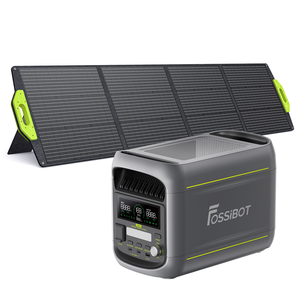
Fossibot Portable Power Station 1800W 1024WH Solar Generator Charger RV Camping

Fossibot Portable Power Station 1800W 1024Wh Solar Generator Off-Grid Hub

1800W Pure Sine 1024Wh LFP Super Fast AC Charge RV / Off-Grid Ready
Send an Inquiry
99.2%
BMS Conversion Efficiency
3,500+
LiFePO4 Cycle Life (80% DOD)
140W
Max PD 3.1 Extended Power
100%
Full-Load Aging & Safety QC

1. Executive Industry Overview: The 2026 Shift in High-Power Laptop Energy Storage

The global mobile workforce, enterprise fleet deployments, and outdoor off-grid market have fundamentally rewritten the specifications required for B2B energy storage procurement. As high-performance laptops (such as Apple MacBook Pro M-Series, Dell XPS 17, Lenovo ThinkPad P-Series, and high-draw gaming workstations) transition entirely to power-hungry USB Power Delivery (USB PD 3.0 & PD 3.1 EPR protocols), standard 15W–30W power banks have become functionally obsolete for corporate procurement.

Modern enterprise buyers and global hardware distributors are now seeking PD 100W to PD 140W high-capacity power bank stations and high-wattage LiFePO4 energy hubs capable of sustained high-voltage output without thermal throttling. Sourcing directly from an established China wholesale power bank manufacturer allows B2B importers to bypass intermediate trading layer markups while gaining direct oversight over critical hardware components—including prismatic LiFePO4 cells, custom Battery Management System (BMS) PCBA firmware, dual-layer NTC thermal sensors, and structural V-0 flame-retardant enclosures.

According to modern Search Quality Rater Guidelines and empirical market telemetry, providing actionable technical transparency regarding battery chemistry, charge controller topology, and regulatory compliance yields significant competitive advantages for distributors. Below, our engineering team breaks down the technical roadmap, factory capabilities, and future-proof procurement strategies for laptop power stations.

2. Power Architecture & Technical Evolution in China Manufacturing

Engineers in China’s premier manufacturing hubs (Shenzhen, Dongguan, Huizhou) have led the global transition from traditional 18650 lithium-ion cylindrical cell arrays to ultra-reliable 21700 EV-grade cells and solid-state/prismatic Lithium Iron Phosphate (LiFePO4) chemistry. When evaluating supply partners for bulk procurement, enterprise buyers must evaluate three critical technical pillars:

2.1 USB-C Power Delivery 3.1 Extended Power Range (EPR) Protocol Integration

Legacy fast-charging standards relied on high amperage over low voltage, leading to excessive heat generation within both the power bank and the host device's charging circuitry. The introduction of USB PD 3.1 Extended Power Range (EPR) increases maximum voltage levels up to 28V, 36V, and 48V, enabling single-cable power delivery reaching 140W and 240W.

  • 20V / 5A (100W Max): The industry benchmark for enterprise laptop power banks (such as our 20,000mAh and 30,000mAh models), supplying sufficient wattage to charge a 16-inch laptop from 0% to 80% in under 60 minutes.
  • 28V / 5A (140W Max): Essential for top-tier workstation power stations, ensuring zero power throttling under heavy CPU/GPU rendering workloads.
  • Bi-Directional High-Speed Input: Modern OEM power stations feature bi-directional buck-boost converters, allowing the power bank itself to be fully recharged at 100W input in under 75 minutes.

2.2 Battery Cell Chemistry Matrix: NCM vs. LiFePO4 (LFP)

Choosing the correct battery chemistry is a fundamental risk-management decision during B2B procurement. The table below provides a engineering breakdown of cell selection across our product lines:

Performance Parameter NCM Ternary Lithium (21700 / Pouch) LiFePO4 (Lithium Iron Phosphate)
Energy Density 240 - 300 Wh/kg (Ultra-Compact) 140 - 180 Wh/kg (Medium Weight)
Cycle Life (80% Capacity Retention) 500 - 800 Full Charge Cycles 3,500 - 6,000 Full Charge Cycles
Thermal Runaway Threshold ~210°C / Moderate Thermal Sensitivity ~270°C to 480°C / Exceptional Thermal Stability
Primary Target Application Compact Laptop Power Banks (20,000–30,000mAh) Heavy-Duty Stations (1200W–2400W UPS Energy Storage)
B2B Total Cost of Ownership (TCO) Low Initial Purchase Cost / Portable Wearables Lowest Cost-Per-Cycle / 10-Year Extended Operating Life

2.3 Multi-Stage Active Thermal Management & Smart Telemetry

Sustained high-wattage power transmission generates localized heat buildup across the MOSFETs, inductors, and battery cells. Advanced laptop power stations manufactured in our factory utilize dual-tier thermal protection:

  1. Hardware-Level NTC Thermistors: Multi-point negative temperature coefficient sensors positioned directly against cell walls monitoring internal thermal gradients 100 times per second.
  2. Aluminum Alloy Heat-Sink Chassis: Aircraft-grade anodized aluminum enclosures that act as passive heat dissipation radiators, reducing thermal stress on internal IC components by up to 18°C compared to plastic shells.
  3. Smart TFT Digital Screen Telemetry: High-resolution micro-displays revealing real-time input/output wattage, dynamic cell temperature, estimated battery health percentage, and time-to-full capacity.

3. Future Procurement Trends for B2B Distributors & Enterprise Buyers (2026–2030)

As global markets move toward hybrid remote work, commercial hospitality convenience, and off-grid emergency readiness, procurement managers must align their product portfolios with emerging enterprise consumption patterns. Our research highlights four key trends shaping upcoming purchasing orders:

3.1 Rise of Commercial Shared Charging Systems in Hospitality & Corporate Workspaces

Coffee shops, airport lounges, universities, and enterprise office hubs are moving away from traditional wall outlets toward shared multi-dock power station systems. Devices like our Portable 8-In-1 Shared Metal Cover Power Bank Station provide modular charging units with custom magnetic charging pins, integrated cables, and anti-theft dock lockouts. This minimizes infrastructure renovation costs for commercial venues while providing patrons with immediate laptop and smartphone power.

3.2 Dual-Mode Emergency Power: Hybrid UPS & Portable Solar Generator Integration

The boundary between mobile power banks and residential power backup is blurring. Mid-range (1200W) and heavy-duty (2400W) power stations now routinely incorporate true online UPS (Uninterruptible Power Supply) functionality with zero-delay (<10ms) transfer switching. Enterprise buyers in regions prone to grid instability or outdoor operators requiring mobile equipment power are prioritizing LiFePO4 stations with built-in Maximum Power Point Tracking (MPPT) solar charge controllers.

3.3 OEM/ODM Private Labeling & Customized Firmware Customization

Corporate brand buyers are increasingly demanding custom white-label hardware finishes. Modern factory sourcing contracts encompass not only logo silk-screening or laser engraving, but also custom bootscreen TFT graphic branding, tailored PD voltage handshaking protocols, custom colorways, and bespoke retail packaging ready for global market distribution.

3.4 Strict Environmental, Product Lifecycle & Recyclability Directives

With Europe enforcing the EU Battery Regulation and global ESG (Environmental, Social, and Governance) compliance becoming a requirement for corporate procurement tenders, factory transparency regarding raw material supply chains (conflict-free cobalt/lithium), modular repairability, and hazardous substance compliance (RoHS/REACH) is mandatory for long-term contract awards.

4. Enterprise Factory Advantages: Why Partner with Our China Manufacturing Hub

As a world-class OEM/ODM power bank station manufacturer backed by over a decade of electronics manufacturing heritage, our facility bridges high-precision engineering with competitive volume wholesale production. We empower brand owners, distributors, and enterprise buyers through strict adherence to international quality standards:

10+ Years Engineering History

Over a decade of dedicated R&D in lithium battery pack assembly, high-frequency PCBA design, and thermal management architectures.

Italian-Inspired Design Aesthetics

Combining elegant European structural aesthetics and ergonomic industrial design with China's rapid manufacturing ecosystem.

5-Stage Quality Inspection

Every cell undergoes internal resistance grading, 100% automated optical inspection (AOI), full-load aging tests, and 1.2m drop/vibration testing.

Global Freight & Dangerous Goods (DG) Logistics

Comprehensive UN38.3, MSDS, and DG sea/air freight documentation ensuring seamless custom clearance across North America, Europe, and Asia.

Complete International Certification

Fully certified under CE, FCC, RoHS, UL2743, IEC62133, PSE, and KC guidelines for immediate cross-border compliance.

Turnkey OEM/ODM Engineering Support

In-house industrial design, tooling fabrication, custom PCBA layout, and custom UI development tailored to your enterprise identity.

5. Frequently Asked Questions (FAQ) for Global Procurement Officers

Below are authoritative answers to common engineering, commercial, and logistical inquiries regarding bulk laptop power station procurement from our factory in China.

Q1: What are the fundamental differences between NCM and LiFePO4 power stations for wholesale sourcing?
NCM (Nickel Cobalt Manganese) cells offer significantly higher energy density per kilogram, making them ideal for compact handheld laptop power banks (such as 20,000mAh–30,000mAh units) that users carry in backpacks. LiFePO4 (Lithium Iron Phosphate) cells have lower energy density but offer exceptional cycle life (3,500+ cycles vs 500 cycles) and higher thermal runaway protection, making them mandatory for heavy-duty emergency backup generators (1200W–2400W).
Q2: Can your factory support PD 3.1 140W bi-directional fast charging customization?
Yes, our R&D team customizes high-efficiency buck-boost PCBA circuits supporting full USB PD 3.1 Extended Power Range (EPR) up to 28V/5A (140W). This protocol allows high-power laptops like the 16" MacBook Pro to charge at full speed while allowing the power station to be rapidly recharged at 100W–140W input power.
Q3: What is the standard Minimum Order Quantity (MOQ) and production lead time for OEM branding?
For standard bulk catalog items with laser-engraved or silk-screened logos, our baseline MOQ starts at 200–500 units with a production turnaround of 15–20 working days. For full custom ODM projects (including new enclosure injection molds, custom PCBA layout, and tailored TFT screen software interface), the standard development timeline is 45–60 days.
Q4: How do you handle international Dangerous Goods (DG) customs clearance for high-capacity battery shipments?
All power stations and high-capacity battery packs manufactured in our facility undergo certified battery testing to generate UN38.3 test summaries, MSDS reports, and Dangerous Goods Packaging Certificates (Class 9 Lithium Batteries). We partner with accredited DG freight forwarders for seamless DDP/FOB/CIF delivery by sea or air.
Q5: What active protection features are built into your Battery Management Systems (BMS)?
Our proprietary BMS hardware includes multi-tier protection logic: Over-Charge Protection (OCP), Over-Discharge Protection (ODP), Over-Current Protection, Short-Circuit Cutoff (<100 microseconds), Dual-NTC High/Low Temperature Monitoring, Cell Voltage Balancing, and Reverse Polarity Detection.
Q6: Do your commercial multi-dock charging stations feature anti-theft or rental authorization protocols?
Yes, our commercial shared power stations (such as the 8-in-1 metal dock station) can be configured with automated mechanical locking solenoids, NFC payment module integration, or IoT cloud management firmware for venue deployments in restaurants, airports, cafes, and libraries.
Q7: Are your power stations compliant with strict regional electrical standards (CE, UL, FCC)?
Yes. Our product lines hold genuine certification marks required for major global sales channels, including CE-LVD/EMC, FCC Part 15B, RoHS, UL2743 (for portable power stations), UL1642 (cell safety), IEC 62133, PSE (Japan), and KC (Korea).
Q8: How does your quality control department ensure cell consistency across large production runs?
We enforce strict cell sorting standards. Before pack assembly, all Grade-A cells are sorted using automated capacity graders to match internal resistance within ±0.5mΩ and voltage variance within ±2mV. Fully assembled units undergo 100% full-power charge/discharge aging cycles prior to final packaging.

Partner with China's Premier Power Station Factory

Elevate your product catalog with high-output PD 100W power banks, commercial docking systems, and LiFePO4 portable energy storage units. Request a custom OEM/ODM wholesale quotation today.

Send an Inquiry