
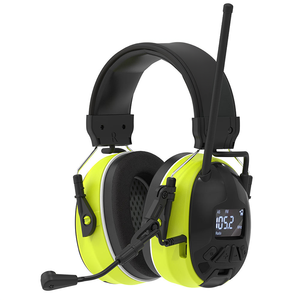
Industrial Noise-Cancelling Safety Bluetooth Earmuffs & Headset
- Integrated FM Radio & HD Mic
- Dynamic Hearing Protection SNR 30dB
- Foldable Ergonomic Cushion Design
Engineered by top-tier Chinese manufacturing facilities utilizing Italian-inspired ergonomics and Shenzhen high-density Acoustic SMT integration.
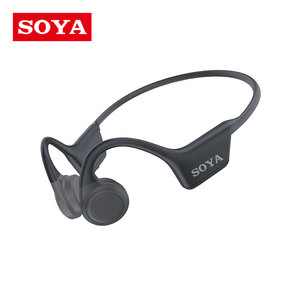
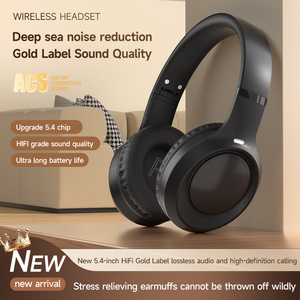
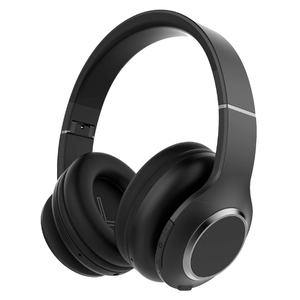
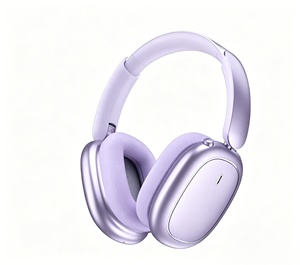
The True Wireless Stereo (TWS) market has matured from early-stage consumer novelties into high-performance, acoustically calibrated, and AI-assisted personal hearable platforms. For global importers, brand owners, enterprise distributors, and OEM buyers, sourcing TWS earbuds directly from China’s leading industrial hubs—principally Shenzhen, Dongguan, and the broader Pearl River Delta ecosystem—demands a rigorous understanding of hardware architecture, RF signal optimization, supply chain economics, and regulatory compliance.
As global buyer expectations shift toward Active Noise Cancellation (ANC), multi-microphone Environmental Noise Cancellation (ENC), LE Audio (Low Energy Audio with LC3 codec), spatial audio tracking, and open-ear air/bone conduction form factors, selecting a top-tier Chinese manufacturing partner requires going beyond surface-level unit pricing. Buyers must evaluate underlying SoC (System-on-Chip) integration, automated SMT (Surface Mount Technology) assembly capabilities, acoustic precision testing (AP555 certification), and battery cycle degradation parameters.
Key technological shifts re-shaping contract manufacturing standards, bill-of-materials (BOM) planning, and consumer market differentiation.
Legacy SBC and AAC codecs are rapidly being superseded by Bluetooth 5.4 LE Audio protocols and the LC3 (Low Complexity Communication Codec). This shift reduces power consumption by up to 45% while enabling multi-stream audio broadcasting (Auracast) and sub-20ms ultra-low latency sync for gaming and video applications.
Modern TWS earbuds combine feedforward and feedback microphones driven by onboard NPU (Neural Processing Unit) algorithms. Chinese tier-1 factories now offer turnkey real-time ambient sound adaptation capable of filtering out 45dB of static noise and up to 98% of wind turbulence during voice calls.
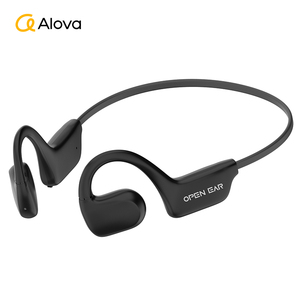
Consumer demand is diversifying toward non-in-ear designs. Open-ear air conduction and bone conduction earbuds represent the fastest-growing OEM category, catering to sports enthusiasts, urban commuters, and industrial safety compliance where situational awareness is critical.
Understanding the architectural breakdown of TWS earbud manufacturing standards ensures buyers optimize their margin structure while mitigating RMA (Return Merchandise Authorization) risks.
| Architectural Parameter | Standard Market OEM Model | Enterprise Tier-1 Factory Standard (LEVORE Standard) | Commercial Sourcing Impact |
|---|---|---|---|
| Bluetooth Chipset / SoC | JL (Jieli) / Bluetrum Basic Chips | Qualcomm QCC / Airoha / Bestechnic (BES) / Realtek | Higher connection stability, extended battery efficiency, low RF dropouts. |
| Noise Cancellation | Single Mic Passive Isolation / Soft ENC | Dual/Triple Mic Hybrid ANC (-35dB to -45dB) + Neural ENC | Premium audio isolation for high-end retail positioning and voice clarity. |
| Acoustic Driver Unit | 6mm - 10mm Standard Copper Ring Driver | 12mm - 14.2mm Titanium / DLC (Diamond-Like Carbon) Diaphragm | Deeper bass response, linear frequency response curve (20Hz–20kHz). |
| Battery Cell Grade | Recycled / Grade-B Lithium Polymer | 100% Pure Cobalt Grade-A Cell with Seiko Protection IC | Prevents battery swelling, supports 500+ charge cycles at >80% capacity. |
| Waterproof Rating | IPX4 (Basic Splash Resistance) | IPX5 to IPX8 Nano-Coating + Ultrasonic Enclosure Sealing | Protects internal PCBA from sweat corrosion and heavy liquid immersion. |
| RF Antenna Engineering | On-board PCB Trace Antenna | LDS (Laser Direct Structuring) / FPC Antenna Integration | 30-meter stable range, zero dropouts in dense urban signal interference. |
Leading Chinese audio factories maintain rigorous quality assurance protocols at every stage of production to guarantee zero-defect mass manufacturing.
High-speed Surface Mount Technology (SMT) lines equipped with 3D Automated Optical Inspection (AOI) inspect every resistor, capacitor, and IC solder joint on the earbud motherboard, eliminating cold solders and short circuits.
100% of manufactured earbuds pass through artificial ear simulators in sound-isolated acoustic chambers to verify total harmonic distortion (THD < 1%), frequency response curves, and phase matching between left and right channels.
Random samples undergo rigorous environmental stress screening: -40°C to 70°C thermal shock testing, 48-hour salt spray anti-corrosion validation, 1.5-meter drop tests, and micro-drop wear simulations.
Ensuring full compliance with international import laws: CE (EMC/LVD), FCC ID, RoHS 2.0, REACH, UN38.3 battery transport safety certification, MSDS, and Telec/KC certifications for East Asian markets.
Direct answers to crucial commercial, technical, and supply chain queries raised by global audio procurement teams.
For standard factory-ready models with custom logo silk-screening and customized gift box packaging, the MOQ typically starts at 1,000 to 2,000 units. For custom color matching (Pantone matching), custom battery capacities, or customized PCBA firmware configurations, MOQ is usually 3,000 units. Full ODM projects requiring private plastic injection tooling molds require an initial run of 5,000 to 10,000 units.
Tier-1 factories utilize automated robotic acoustic test stations powered by Audio Precision (AP) analyzers and SoundCheck software. Drivers are pre-sorted into strict ±1dB tolerance bands prior to enclosure assembly. Furthermore, automated EQ flashing ensures every motherboard matches the master target frequency response curve before final sealing.
ANC (Active Noise Cancellation) uses outward and inward microphones to generate anti-noise sound waves to isolate the wearer from ambient environmental noise. ENC (Environmental Noise Cancellation) and CVC (Clear Voice Capture) focus exclusively on processing the wearer's voice during calls, isolating vocal frequencies from background commotion so the recipient hears clear audio.
For North America, products require FCC ID certification for intentional RF radiators, plus UL/CEC compliance for charging cases. For the European Union, CE-RED (Radio Equipment Directive), RoHS 2.0, REACH, and WEEE certifications are mandatory. Additionally, the lithium battery must hold UN38.3, IEC 62133, and MSDS test reports for international air/sea shipping.
Standard OEM production (existing tooling with custom artwork, software pairing name, and packaging) typically requires 20 to 25 calendar days from sample sign-off. Full ODM development—including 3D industrial design, acoustic cavity simulation, CNC prototyping, plastic injection mold creation, and certification testing—takes approximately 45 to 60 days.
Combining European design sensitivity with Shenzhen high-volume manufacturing efficiency for global B2B success.
Headquartered in Rome, Italy, with main automated production facilities situated in the electronics manufacturing core of Shenzhen, LEVORE provides a strategic bridge between refined aesthetics, rigorous acoustic engineering, and high-yield contract manufacturing.
Over the past decade, we have scaled our production infrastructure to support major consumer electronics brands, retail chains, and telecom operators across 30+ countries. Our dedicated R&D division holds over 50 patents in Bluetooth RF optimization, active noise reduction algorithms, and high-efficiency battery management.
Connect directly with our senior acoustic engineering and sales team for instant RFQ catalog requests, customized OEM samples, and factory audit scheduling.