Precision-engineered dual USB and multi-port charging adapters for global importers, brand owners, and wholesale distributors.
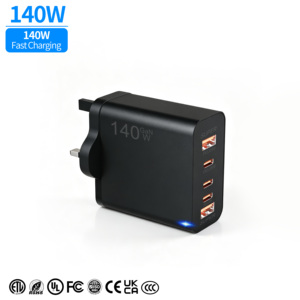
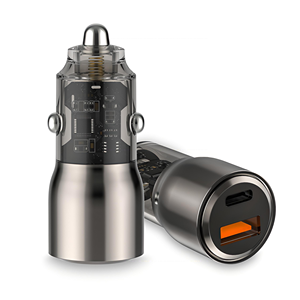
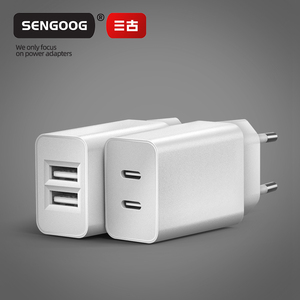
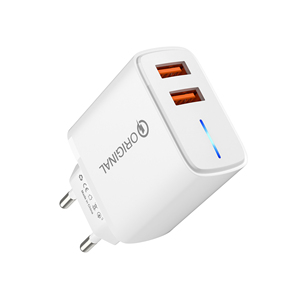
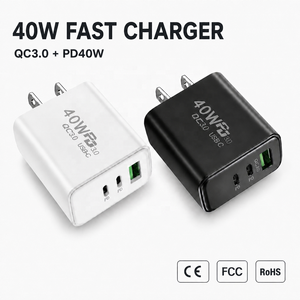
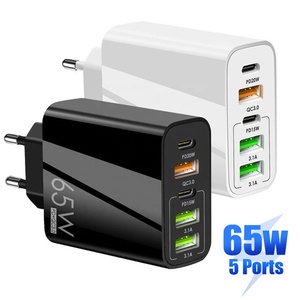
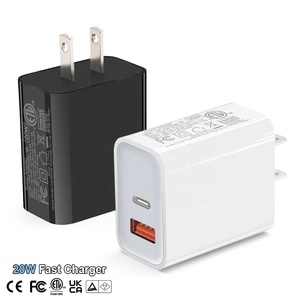
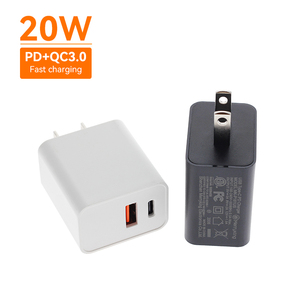
In the rapidly changing consumer electronics landscape, procurement professionals, enterprise distributors, and OEM brand buyers face a dual challenge: satisfying consumer demand for multi-port fast charging while navigating stringent European regulatory compliance standards. Modern mobile devices, ultrabooks, tablet PCs, and personal audio gear require increasingly dynamic power distribution networks, robust thermal management, and compact form factors.
This technical white paper serves as an authoritative B2B procurement guide. It outlines the architectural evolution of dual USB (USB-A & USB-C) wall chargers, the commercial implications of Gallium Nitride (GaN III) semiconductors, critical compliance verification protocols, and global supply chain forecasting for 2025–2030.
Understanding the hardware engineering, protocol switching logic, and semiconductor choices that differentiate premium OEM factories from low-tier assemblers.
Transitioning from silicon-based MOSFETs to Third-Generation Gallium Nitride (GaN III) switches allows power conversion frequencies up to 500 kHz. This yields a 40% reduction in thermal dissipation and shrinking power adapter footprints by 35% without sacrificing output wattage.
Advanced Microcontroller Units (MCUs) dynamically renegotiate power distribution upon dual-device insertion. For instance, a 40W total output charger automatically recalibrates from PD 30W single-port delivery down to dual 20W + 20W or 30W + 10W configurations based on real-time handshake protocols.
Certified factories implement Over-Temperature Protection (OTP), Over-Voltage Protection (OVP), Over-Current Protection (OCP), and Short-Circuit Protection (SCP). Thermistors embedded into the primary transformer continuously sample temperature at 100Hz intervals.
| Specification Feature | Standard Legacy Dual USB Charger | CE-Certified Fast Charger (Cantell / LEVORE Standard) | Enterprise GaN Multi-Port Hub (100W–140W) |
|---|---|---|---|
| Semiconductor Base | Standard Silicon (Si) MOSFET | High-Efficiency Silicon / Super Junction | GaN III Fast-Switching IC |
| Primary Protocol Support | BC 1.2, Standard 5V/2.4A | PD 3.0, QC 3.0, FCP, AFC, Apple 2.4A | PD 3.1 (EPR), QC 4.0+, PPS, AFC, FCP |
| CE Certification Integrity | Basic Self-Declaration (Unverified) | Full CE-LVD & CE-EMC Third-Party Tested | CE, GS, UL, FCC, RoHS, REACH Certified |
| Power Density | 0.35 W / cm³ | 0.65 W / cm³ | 1.15 W / cm³ |
| Full Load Operating Temp | > 75°C Outer Shell Temp | < 58°C Surface Temp (EN 62368-1) | < 52°C Surface Temp with PC-Abs Shielding |
Macroeconomic shifts, unified charging port mandates, and environmental regulations shaping factory requirements for the next decade.
With the European Union’s Common Charger Directive (Directive (EU) 2022/2380) enforcing USB Type-C across mobile devices, tablets, handheld game consoles, and cameras, procurement departments must phase out legacy single USB-A wall blocks. Dual configurations featuring at least one high-output USB-C PD port (minimum 20W to 30W for smartphones, 65W+ for laptops) are now mandatory for European market entry.
Energy-related Products (ErP) regulations strictly cap idle power consumption to less than 0.075W under no-load conditions. Manufacturers must incorporate low-standby PWM controller ICs that switch to ultra-low-power sleep modes when devices reach full charge, preventing energy bleed and satisfying ESG corporate sustainability targets.
Leading global brands are demanding PCR (Post-Consumer Recycled) Polycarbonate/ABS housing materials. Top-tier factories now offer 30% to 85% PCR plastic enclosures that maintain V-0 flame-retardant performance ratings (UL94 V-0) while substantially lowering the overall carbon footprint of bulk shipments.
Standard fixed-voltage fast charging is giving way to PPS within the USB PD 3.0/3.1 specification. PPS allows small micro-adjustments in voltage (3.3V to 11V at 20mV steps) to minimize conversion loss inside the phone, drastically reducing battery heating during rapid top-ups.
Combining European design sensibilities with high-volume, precision automated manufacturing lines.
Headquartered with modern engineering operations in Rome, Italy, and supported by automated high-speed SMT factory lines, LEVORE, Cantell, and HNT stand as premier B2B manufacturing partners. With over a decade of dedicated innovation in power management, smart wearables, and mobile accessories, our facilities support global retailers, telecom operators, and consumer tech distributors across 30+ countries.
High-speed Yamaha surface-mount technology lines ensure pinpoint placement of micro-components, secondary ICs, and GaN power switches with zero manual handling errors.
Every production batch undergoes 4 hours of full-load aging test at 45°C ambient temperature room conditions to filter out premature component failure before final assembly.
Complete compliance documentation including EN 62368-1 safety test reports, EN 55032/55035 EMC test certificates, and European plug pin torque verification.
Address critical commercial, regulatory, and engineering questions before placing enterprise OEM/ODM orders.
Our comprehensive CE documentation package includes the formal EU Declaration of Conformity (DoC), full test reports issued by accredited laboratories (ISO/IEC 17025) for CE-LVD (Low Voltage Directive 2014/35/EU according to EN 62368-1) and CE-EMC (Electromagnetic Compatibility Directive 2014/30/EU according to EN 55032 / EN 55035), RoHS 2.0 chemical analysis report, and ErP Energy Efficiency compliance verification.
Static power output assigns fixed maximum current caps to each port (e.g., Port A always limited to 10W, Port B to 20W) regardless of whether one or two devices are connected. Dynamic power allocation uses an intelligent MCU to measure load requirements. When a single laptop or flagship phone is plugged in, the charger routes maximum wattage (e.g., 65W or 40W) to a single port; when a second device is inserted, power is instantly rebalanced (e.g., 30W + 10W) without interrupting power transmission.
Yes. As a direct OEM factory manufacturer, we support complete customization. Wall adapters can be fitted with interchangeable or fixed EU, US, UK, and AU AC pins compliant with regional dimension standards. Custom branding options include high-precision laser engraving, pad printing, silk-screen printing, customized color matching (Pantone reference), and bespoke retail packaging (gift box, blister card, or eco-friendly kraft packaging).
We utilize a three-part thermal dissipation strategy: (1) High-thermal-conductivity potting compound surrounding internal transformers and MOSFETs; (2) Thick copper PCB layers (2oz copper standard) that act as passive heatsinks; (3) Integrated NTC thermistors linked to the controller IC that automatically adjust output current if ambient temperatures exceed 65°C, ensuring housing surface temperatures remain strictly within EN 62368-1 safety thresholds (< 77°C for touchable plastic).
For standard stock inventory with neutral packaging, MOQs start as low as 100 to 500 units for immediate delivery. For custom private-label branding, customized casing colors, and specialized retail packaging, the typical OEM MOQ is 1,000 to 3,000 units. Standard production lead time is 15 to 22 business days post-sample approval and deposit confirmation.
GaN fast chargers offer significantly higher power density, allowing higher wattage outputs (such as 65W, 100W, or 140W) in compact sizes comparable to standard 20W silicon bricks. While unit manufacturing cost for GaN is slightly higher, overall freight and warehousing costs per watt are reduced by up to 30% due to lower volumetric weight. Furthermore, GaN chargers command higher retail prices and profit margins in European and North American markets.
Our multi-port charger lineup integrates universal multi-protocol decoder chips (such as Injoinic, Weltrend, or Cypress controllers). These ICs continuously scan data lines (D+/D- and CC pins) to recognize protocol request signals from connected Apple iPhones, iPad Pros, Samsung Galaxy devices (using PPS 25W/45W standard), Huawei FCP/SCP, and Xiaomi QC protocols, ensuring optimal charging speeds across all mobile brands.
Our multi-stage QA process includes: (1) Incoming Quality Control (IQC) on all raw capacitors, ICs, and transformers; (2) Automatic Optical Inspection (AOI) post-SMT soldering; (3) In-Circuit Testing (ICT) of PCB assemblies; (4) 100% full-load aging test for 4 hours; (5) Hi-Pot (High Voltage Dielectric Withstand) testing at 3000V AC to guarantee primary-to-secondary insulation; (6) Final Quality Control (FQC) sampling for drop resistance, plug insertion durability, and aesthetic perfection.
Request our comprehensive B2B product catalog, OEM factory price sheets, and full CE/GS certification documentation today.