Discover expert guides, technology trends, and market analysis on smart wearables, audio devices, and GaN fast chargers.
In-depth reviews, features breakdown, and buying considerations for fitness and touchscreen smartwatches.
Explore the latest advances in wireless Bluetooth 5.3 headphones, earphone technology, and personal audio.
A Portable Powerbank Charger is a compact battery that stores electrical energy for later use. It can recharge phones, tablets, earbuds, cameras, and other compatible devices. Imagine a phone showing 12% beside a train window. A power bank can provide useful backup without needing a wall socket nearby. Its capacity is usually measured in milliamp-hours, or mAh. However, a larger number does not always mean more usable charging. Energy is lost during voltage conversion, cable transfer, and the device’s own charging process.
Inside, rechargeable lithium-ion cells store energy as chemical power. When connected, a control circuit changes that stored energy into a stable USB output. The circuit may support USB-A, USB-C, or faster charging standards. Your device and the charger communicate before higher power is delivered. This helps manage charging speed and reduce unnecessary stress. In practical use, I would check the port, cable condition, output rating, and remaining battery level first. A warm casing can be normal during fast charging, but unusual heat, swelling, or damage deserves immediate attention. Do not ignore it.
The most reliable guidance comes from manufacturer specifications and recognized safety testing. A power bank rated at 10,000 mAh may not deliver 10,000 mAh directly to a phone. That detail is easy to miss. The following guide explains its internal process, charging limits, real-world capacity, and sensible safety habits. It also questions common marketing claims, because convenience should never replace careful judgment.
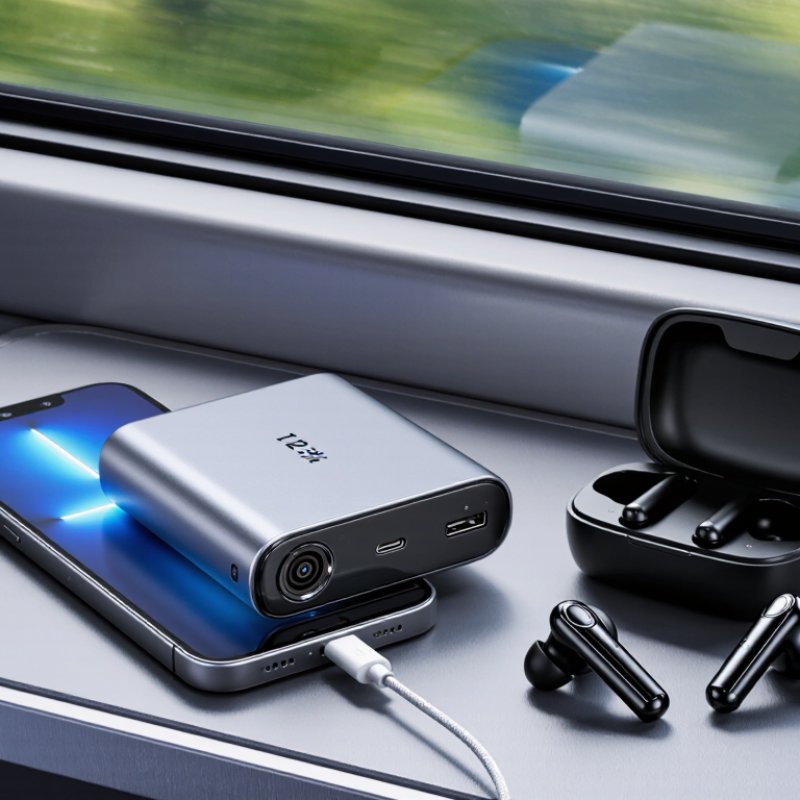
A portable power bank charger is a compact battery pack that stores electrical energy for later use. It usually contains rechargeable lithium-ion or lithium-polymer cells, a control circuit, and one or more output ports. The circuit regulates voltage before sending power to a phone, tablet, camera, or other compatible device. In simple terms, it works like a spare wall outlet in your bag.
You recharge the power bank through its input port, often using USB-C. When you connect a device, sensors identify the required voltage and current. Capacity is commonly listed in milliamp-hours, but real output is lower than the printed number. Energy is lost during voltage conversion and heat production. I have found that a power bank rated at 10,000 mAh may provide roughly 6,000 to 7,000 mAh in practical use. That difference can surprise people. It should not be treated as a fault.
A reliable unit should include overcharge, overcurrent, short-circuit, and temperature protection. Check the cable, port condition, and charging speed before use. Do not use a swollen, cracked, unusually hot, or leaking power bank. Keep it away from water and direct sunlight. I once carried one under heavy books, and the port became loose over time. That small mistake changed how I store these devices. Capacity, safety certification, and device compatibility matter more than appearance.
A power bank is a compact battery system, not merely a larger phone battery. Its main component is usually a rechargeable lithium-ion or lithium-polymer cell. A protection circuit monitors voltage, current, temperature, and charging balance. It disconnects the cell when conditions become unsafe. Small details matter. A second circuit manages input charging and output delivery. The USB-IF USB Power Delivery 3.1 specification supports power levels up to 240 watts, although most portable units operate far below that limit. This gap is often misunderstood.
Other components include a voltage converter, charging ports, a control chip, wiring, insulation, and an outer enclosure. The converter changes the battery’s variable voltage into a stable output. A fuel-gauge chip estimates remaining capacity, but its percentage is not perfectly precise. It can fall quickly after heavy use. According to Grand View Research, the global power bank market was valued at about $13.6 billion in 2023, with projected growth through 2030. That expansion increases pressure for thinner designs and faster charging. However, smaller housings can reduce heat dissipation. Safety standards such as IEC 62133-2 address rechargeable battery safety, while UN 38.3 covers transport testing. These standards improve reliability, but no circuit can correct careless charging habits, damaged cables, or prolonged heat exposure.
My own practical view is simple: capacity numbers look impressive, yet conversion losses mean usable energy is always lower.
A portable power bank is a rechargeable battery inside a protective enclosure. Most current models use lithium-ion or lithium-polymer cells. The cell stores energy chemically, not as a simple tank of electricity. A charging circuit pushes energy into the cell. A protection board monitors voltage, temperature, and current. Small details matter. The International Energy Agency reported that global lithium-ion battery demand exceeded 750 GWh in 2023, showing how widely this chemistry is used.
When a phone is connected, an internal converter raises the cell’s roughly 3.7-volt voltage to a regulated USB output. The controller manages charging conditions and limits current when heat or voltage rises. A 10,000 mAh power bank sounds large. At 3.7 volts, it stores about 37 watt-hours. If conversion efficiency reaches 85%, only about 31 watt-hours reaches the device. A 10-watt output could therefore operate for roughly three hours under ideal conditions. Real use is shorter. Cable resistance, screen activity, and heat consume part of the energy.
Grand View Research’s 2024 Portable Power Bank Market report projects the market to grow by more than 8% annually through 2030. That growth does not make every label clearer. Rated capacity is measured inside the cell, while usable capacity is measured after conversion. I would compare watt-hours, output wattage, and safety certifications, not mAh alone. Even this method has limits. Aging cells lose capacity, and cold conditions can reduce delivery. The number on the case is a promise with conditions.
What Is a Portable Powerbank Charger and How Does It Work?
A portable power bank stores electrical energy in rechargeable internal cells. Its input circuit accepts power from a wall adapter or computer. The circuit controls voltage and current before energy reaches the cells. When you connect a phone, the process reverses. The cells send direct current to an output circuit. This circuit raises or adjusts the voltage for the connected device.
How Do Power Banks Charge Connected Devices?
The connected device does not simply receive unlimited electricity. Its charging system communicates with the power bank through the cable. It requests a suitable voltage and current, when supported. The power bank then supplies power within its output limits. Inside the phone, another controller manages the final charging stage. It protects the battery from excessive heat, voltage, and current.
The process loses some energy as heat. A power bank rated at 10,000 mAh will not deliver all 10,000 mAh to a phone. Voltage conversion, cable resistance, and circuit efficiency reduce the usable amount. In daily use, a short, undamaged cable usually provides more reliable charging. Keep the power bank away from direct heat while it operates. Heat matters.
Charging speed also depends on the device, cable, and output port. A higher capacity power bank may still charge slowly if its output is limited. I once assumed a larger capacity always meant faster charging. That assumption was incomplete. A power bank can recharge one device while supporting another, but this may divide its available power. Rapid charging can also stop when the device becomes warm.
A portable power bank stores energy in rechargeable lithium-ion cells and releases it through a USB output. Its safety system monitors charging and discharging continuously. Overcharge protection stops the cells from receiving excessive voltage. Overcurrent protection limits unusually high electrical flow. Short-circuit protection can disconnect the output within seconds. Many units also include temperature control, which reduces charging or stops operation when heat rises too far. These features matter when the device sits in a warm car or under a pillow.
Use it carefully.
In practical use, a power bank may feel warm during fast charging, but it should not become painfully hot, swell, leak, or smell unusual. Stop using it if any of these signs appear. Keep it dry, avoid crushing it, and use an undamaged cable with a suitable output rating. A power bank should not be opened at home. Internal cells can remain charged, even when the indicator shows zero.
Its printed capacity has limits. The advertised number describes stored energy inside the cells, not the exact energy reaching a phone. Voltage conversion, cable resistance, and heat create losses. A 10,000 mAh model will not usually deliver 10,000 mAh directly to a phone. Battery age also reduces runtime. The percentage display can look reassuring, but it is only an estimate. I still treat it as a rough guide, not precise evidence. Charging speed may fall when several devices share one output. Travel restrictions can also vary, so users should check current carrier requirements before flying.
A power bank stores energy in rechargeable lithium-ion or lithium-polymer cells and uses electronic circuits to convert that energy into a regulated USB output for charging portable devices.
The chart compares nominal battery energy with estimated usable USB energy. The estimate assumes a typical 3.7 V cell voltage and approximately 85% conversion efficiency, so real results vary with cable quality, charging speed, temperature, and device power requirements.
Common power banks include overcharge, over-discharge, short-circuit, overcurrent, and temperature protection.
A control circuit regulates the stored battery voltage into a stable USB output, commonly 5 V or a higher negotiated charging voltage.
Energy is lost during voltage conversion, capacity declines with age and heat, and high-power devices may charge slowly or stop charging.
It is a compact rechargeable battery pack. It stores energy for later use. Think of a spare wall outlet in your bag.
Internal cells store energy chemically. A control circuit converts the cell voltage into suitable power for your device. Small losses occur.
Capacity is usually measured inside the battery cell. Voltage conversion, heat, and cable resistance reduce the energy reaching your device. Real output varies.
It may provide about 6,000 to 7,000 mAh in practical use. At roughly 3.7 volts, it stores about 37 watt-hours. The result depends on efficiency and usage.
Sometimes, but not always. Screen use, battery size, cable quality, and conversion losses affect the result. The printed number is not a guarantee.
Look for overcharge, overcurrent, short-circuit, and temperature protection. These controls reduce risks during charging. Certification also deserves attention.
Stop using it if the case is swollen, cracked, leaking, or unusually hot. Keep it away from water and direct sunlight. Do not ignore strange smells.
Check the cable and charging port regularly. Avoid crushing it under heavy books or other objects. I once ignored this, and the port became loose.
Compare usable energy, output wattage, compatibility, and safety certification. Do not judge it by appearance alone. I still sometimes focus too much on capacity.
A Portable Powerbank Charger is a compact, rechargeable device designed to store electrical energy and provide power to mobile phones, tablets, cameras, and other compatible electronics when access to a wall outlet is unavailable. Its main components typically include rechargeable battery cells, a control circuit, input and output ports, and a protective outer casing. Together, these parts regulate charging, manage power flow, and help the device operate safely.
When connected to a power source, the power bank stores energy inside its battery cells. When a device is plugged in, the control circuit converts and delivers that stored energy through the output port at a suitable voltage and current. Built-in safety features may protect against overcharging, overheating, short circuits, excessive current, and deep discharge. However, power banks have limitations, including finite capacity, charging losses, slower performance with high-power devices, and gradual battery wear. Proper storage, suitable cables, and regular inspection can help maintain reliable and safe operation.