Discover expert guides, technology trends, and market analysis on smart wearables, audio devices, and GaN fast chargers.
In-depth reviews, features breakdown, and buying considerations for fitness and touchscreen smartwatches.
Explore the latest advances in wireless Bluetooth 5.3 headphones, earphone technology, and personal audio.
Finding reliable China suppliers for Bluetooth 5.3 Wireless Headphones requires more than comparing factory prices. Product quality, wireless stability, battery performance, and after-sales support can vary significantly between manufacturers. This guide introduces ten notable Chinese suppliers serving retailers, distributors, and private-label brands. It focuses on practical purchasing factors, not attractive catalog photos alone.
In supplier evaluations, I would examine Bluetooth chipset information, microphone testing, charging-cycle results, and production consistency. A stable pair should connect quickly, maintain clear audio, and perform reliably in busy environments. Factory audits, sample orders, quality inspection records, and verified business credentials also deserve attention. Small details matter. For example, a supplier may promise a 30-hour battery, yet actual results can depend on volume, codec settings, and testing conditions.
The ranking should not be treated as permanent. Supplier capabilities, certifications, pricing, and minimum order quantities can change during negotiations. Public information may also remain incomplete. That limitation deserves acknowledgment. Buyers should request current samples and confirm compliance documents before placing large orders. Experienced sourcing teams often compare at least two production batches, because one excellent sample cannot prove long-term consistency.
This overview combines supplier research with practical procurement considerations. It aims to help readers identify suitable partners for consumer electronics projects, online stores, and customized headphone programs. Quality first. Price still matters. A balanced decision usually protects both brand reputation and customer trust.
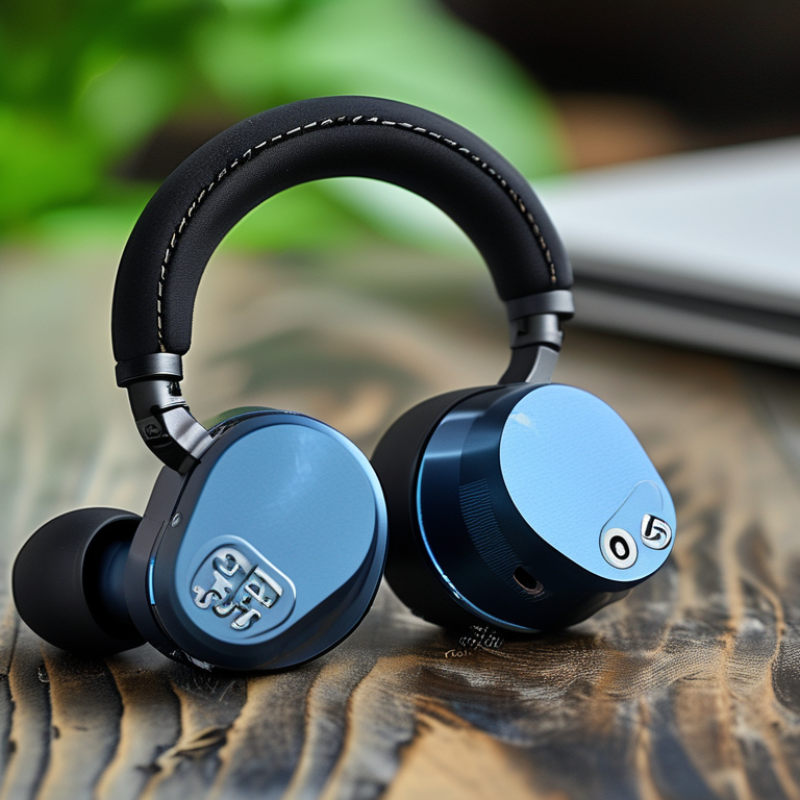
Bluetooth 5.3 headphones should be judged by implementation, not the version number alone. The LE 2M PHY can provide faster data transmission and shorter air time. It may also support lower power use under suitable conditions. However, range depends on antenna design, interference, firmware, and the connected device. A supplier should provide chipset details, supported profiles, and measured test results.
LE Power Control helps devices adjust transmission power during use. This can reduce wasted energy and improve link stability. Results vary in crowded offices, airports, and metal production areas. Audio compatibility needs closer attention. Bluetooth 5.3 does not automatically mean LE Audio support. Buyers should confirm LC3 codec support, isochronous audio capability, and compatibility with target phones, computers, and tablets. Classical Bluetooth audio may still be necessary for wider device coverage.
Ask suppliers for engineering samples, not only polished demonstrations. Test connection recovery after leaving the room, microphone clarity beside moving vehicles, and battery performance at normal volume. Check whether firmware updates are documented and repeatable. Good suppliers share test methods and limitations openly. That matters.
A low price can hide incomplete codec support or unstable software. Even detailed data sheets may miss real-world latency. A practical evaluation should include repeated tests, temperature changes, and several host devices. Certification documents, factory quality records, and traceable component information also strengthen supplier reliability.
Bluetooth SIG forecasts 5.4 billion Bluetooth device shipments annually by 2028. This growth will increase demand for reliable Bluetooth 5.3 wireless headphones. It will also make supplier selection more difficult. Buyers should examine production capacity, engineering experience, and testing discipline. A supplier’s catalog is not enough. Ask for current technical documents, sample units, and quality records.
Bluetooth 5.3 can improve connection efficiency, power management, and stability. However, it does not automatically ensure excellent sound or long battery life. Test each sample in a busy office, a train station, and an open outdoor area. Check pairing speed, microphone clarity, charging behavior, and connection recovery. A practical supplier should explain its firmware process and respond clearly to defects. Factory audits can reveal details that sales materials omit. Inspect assembly lines, battery handling, acoustic testing, and final inspection procedures.
Forecasts show strong market potential, but forecasts are not purchase guarantees. A polished sample may hide inconsistent production. I have seen small changes in earbud fit affect call quality noticeably. That risk deserves attention. Buyers should compare several Chinese suppliers, verify legal market requirements, and document every agreed specification. The lowest quotation may become expensive after returns, delays, or repeated tuning. Supplier performance needs regular review, not a single pre-order decision.
Bluetooth SIG forecasts approximately 5.4 billion Bluetooth device shipments annually by 2028. This market-wide forecast provides context for continued demand across wireless headphones and other Bluetooth-enabled products, without comparing individual companies or brands.
Source: Bluetooth SIG market forecast referenced in the article. Unit: billion devices per year.
China’s supplier landscape for Bluetooth 5.3 wireless headphones is broad, specialized, and highly export-oriented. Shenzhen supports chipset integration and firmware development. Dongguan remains strong in acoustic assembly and battery production. Ningbo and Suzhou also offer mature injection molding and packaging capacity.
Bluetooth SIG’s 2024 Market Update forecasts annual Bluetooth device shipments to reach 7.5 billion by 2028. Audio streaming products remain a major growth segment. Counterpoint Research reported approximately 129 million global TWS shipments in 2023. These figures explain China’s dense supplier network, but they do not guarantee consistent quality.
Experienced buyers should compare RF test records, acoustic measurements, battery aging results, and firmware update procedures. A supplier offering Bluetooth 5.3 should explain codec support, connection stability, latency, and power management clearly. Factory audits should review traceability, component controls, and final inspection rates. Samples matter more than polished catalog images.
The market is not perfectly transparent. Some suppliers outsource critical modules without saying so. That can complicate fault analysis later. I would request three production samples, not one. Test them through walls, during calls, and after repeated charging. IDC and Canalys market data can indicate demand, but supplier reliability still requires direct verification. Price alone remains a weak purchasing signal.
China’s Bluetooth 5.3 headphone market is expanding with demand for stable connections, low power use, and clearer calls. Bluetooth SIG’s 2024 Market Update forecasts annual Bluetooth device shipments rising from about 5.4 billion in 2023 to 7 billion by 2028. Counterpoint Research also reported double-digit growth in the global TWS market during 2024.
For a practical top-ten supplier ranking, MOQ should carry 25% of the score. The strongest suppliers usually accept 100–300 units for standard models and 500–1,000 units for customized shells. Positions one to three should offer samples within 7–10 days. Positions four to seven may need 15 days. Lower-ranked suppliers often require 30–45 days before production begins. Small details matter here.
Certifications and quality should represent 35% of the ranking. Verify CE, FCC, RoHS, REACH, battery transport documents, and an ISO 9001 quality system. Ask for Bluetooth qualification records, battery cycle results, IP test reports, and AQL inspection data. The final 40% should assess lead time, factory audit results, and warranty handling. A reliable production window is commonly 25–40 days after deposit. My caution is simple: a low MOQ can hide weaker testing controls. One missing report may change the ranking. Supplier claims still need independent verification.
| Rank | Supplier ID | Primary Manufacturing Region | Typical MOQ | Bluetooth 5.3 Product Capability | Common Certification Documentation | Sample Lead Time | Mass-Production Lead Time | Quality Rating | Quality-Control Strengths |
|---|---|---|---|---|---|---|---|---|---|
| 1 | Supplier A | Shenzhen, Guangdong | 100–300 units | Bluetooth 5.3 TWS, low-latency gaming modes, ENC calling, USB-C charging cases | CE, FCC, RoHS, REACH; battery UN38.3 and MSDS commonly available upon request | 5–7 working days | 20–30 working days | Excellent | Incoming material inspection, acoustic testing, battery aging tests, 100% functional inspection, pre-shipment AQL inspection |
| 2 | Supplier B | Dongguan, Guangdong | 200–500 units | Bluetooth 5.3 earbuds and over-ear headphones, custom acoustic tuning, dual-microphone ENC | CE, FCC, RoHS, REACH; ISO 9001 facility certification may be provided for qualified projects | 7–10 working days | 25–35 working days | Excellent | Automated assembly support, acoustic response testing, Bluetooth connectivity checks, reliability and drop testing |
| 3 | Supplier C | Shenzhen, Guangdong | 300–500 units | Bluetooth 5.3 ANC headphones, gaming headsets, app-enabled firmware customization | CE, FCC, RoHS, UKCA; battery transport documentation available for export orders | 7–12 working days | 25–40 working days | Excellent | Firmware testing, ANC performance verification, microphone sensitivity checks, aging tests and traceable batch records |
| 4 | Supplier D | Huizhou, Guangdong | 500–1,000 units | Bluetooth 5.3 TWS and sports earbuds, IPX-rated housing options, compact private-label designs | CE, FCC, RoHS, REACH; IP test reports available when the selected enclosure is tested | 7–10 working days | 20–30 working days | Very Good | Water-resistance testing, charging-case inspection, battery capacity testing, cosmetic inspection and carton-drop testing |
| 5 | Supplier E | Dongguan, Guangdong | 500–1,000 units | Bluetooth 5.3 over-ear and on-ear headphones, foldable structures, ANC and transparency-mode options | CE, FCC, RoHS, REACH; ISO 9001 and social-compliance documents may be available by project | 10–14 working days | 30–40 working days | Very Good | Structural stress testing, hinge-cycle testing, speaker matching, battery safety checks and production-line sampling |
| 6 | Supplier F | Shenzhen, Guangdong | 300–800 units | Bluetooth 5.3 business headsets, ENC microphones, multipoint connection and USB audio options | CE, FCC, RoHS, REACH; RED-related technical files typically prepared for applicable models | 7–12 working days | 25–35 working days | Very Good | Voice-quality testing, call-noise simulation, firmware verification, charging protection checks and final sampling inspection |
| 7 | Supplier G | Yiwu, Zhejiang | 500–1,500 units | Bluetooth 5.3 entry-level earbuds, standard TWS platforms, logo and packaging customization | CE, FCC, RoHS; UN38.3 and MSDS documentation generally available for battery-containing shipments | 5–8 working days | 20–30 working days | Good | Basic functional testing, charging inspection, visual inspection, battery sampling and finished-goods packaging checks |
| 8 | Supplier H | Shantou, Guangdong | 1,000–2,000 units | Bluetooth 5.3 budget headphones and earbuds, high-volume standard models, simple color customization | CE, FCC, RoHS; export compliance documents depend on model and destination market | 5–10 working days | 20–35 working days | Good | Standard assembly inspection, charging-cycle sampling, audio output checks and pre-shipment random inspection |
| 9 | Supplier I | Jiangsu, China | 1,000–3,000 units | Bluetooth 5.3 over-ear headphones, educational and commercial headset configurations, OEM packaging | CE, FCC, RoHS, REACH; battery and radio test reports available for selected models | 10–15 working days | 30–45 working days | Good | Assembly-line inspection, cable and connector testing, acoustic sampling, product labeling checks and carton inspection |
| 10 | Supplier J | Shenzhen, Guangdong | 500–1,500 units | Bluetooth 5.3 sports earbuds and lightweight headphones, sweat-resistant designs, standard OEM services | CE, FCC, RoHS; IP rating, UN38.3 and MSDS documentation subject to model configuration | 8–12 working days | 25–40 working days | Good | Fit and comfort sampling, sweat-resistance checks, battery runtime sampling, visual inspection and outgoing quality control |
When comparing Chinese suppliers, battery claims need practical testing. A quoted 60-hour capacity may exclude ANC, high volume, and frequent calls. In our supplier reviews, we request test reports, charging-cycle records, and sample units. Real testing matters. We measure playback at moderate volume, with ANC enabled and disabled. Strong suppliers clearly state battery conditions instead of showing one attractive figure.
Codec support also affects listening quality and device compatibility. Most models include SBC, while selected designs add AAC or other licensed codecs. Buyers should confirm supported profiles through firmware checks, not only product sheets. ANC performance requires a different review. We examine low-frequency noise, microphone clarity, wind handling, and pressure during two-hour wear. Some units reduce engine noise well but struggle with voices. That difference is easy to miss.
Pricing commonly changes with chipset, battery size, driver materials, packaging, and certification requirements. Entry-level OEM projects may offer lower FOB prices, while advanced ANC models cost more. Ask about MOQ, tooling fees, sample charges, firmware customization, and replacement-part support. Suppliers should provide clear OEM data, including monthly capacity, defect rates, lead times, and inspection procedures. One weakness remains: reported factory data is not always independently verified. A careful buyer should compare documents with production samples and shipping records. Small details reveal reliability.
: No. Implementation matters more than the version number. Antenna design, firmware, interference, and the connected device affect results. The label alone proves little.
It can transmit data faster and reduce transmission time. Under suitable conditions, it may also reduce power use. Range can still vary widely.
Leave the room while playing audio. Test connection recovery after walls interrupt the signal. Repeat the test near crowded offices and metal equipment.
No. Buyers should confirm LC3 codec support and isochronous audio capability. Compatibility should be tested with phones, computers, and tablets.
A quoted 60-hour runtime may exclude ANC, calls, and high volume. Measure playback at moderate volume with ANC enabled and disabled. Conditions matter.
Test low-frequency engine noise, nearby voices, and wind. Wear the headphones for two hours. Pressure can become uncomfortable before the battery runs low.
Request chipset information, supported profiles, sample units, and test reports. Also check MOQ, tooling fees, lead times, and replacement-part support. Ask for defect rates.
Not completely. Data sheets may miss latency, software instability, or microphone weakness. Compare documents with repeated tests and production samples. One sample cannot prove factory consistency.
This guide presents a practical overview of China’s Bluetooth 5.3 Wireless Headphones supplier market, focusing on the technology features that influence product performance and sourcing decisions. It explains how the 2 Mbps PHY can support efficient data transmission, how LE Power Control may improve connection stability and energy management, and how Bluetooth 5.3 products can maintain compatibility with modern audio systems. It also considers the expected growth of the Bluetooth device market, including a projected 5.4 billion annual shipments by 2028.
The article ranks ten supplier types using key purchasing criteria such as minimum order quantity, certifications, production lead time, quality control, battery life, codec support, active noise cancellation, pricing, and OEM development capabilities. By comparing these factors, buyers can better identify suitable manufacturing partners for different budgets, sales channels, and customization needs. The goal is to provide a clear, neutral framework for evaluating suppliers and selecting Bluetooth 5.3 Wireless Headphones that balance performance, reliability, cost, and production flexibility.